Jute vs. Wool vs. Cotton: Choosing the Right Rug for Your Space
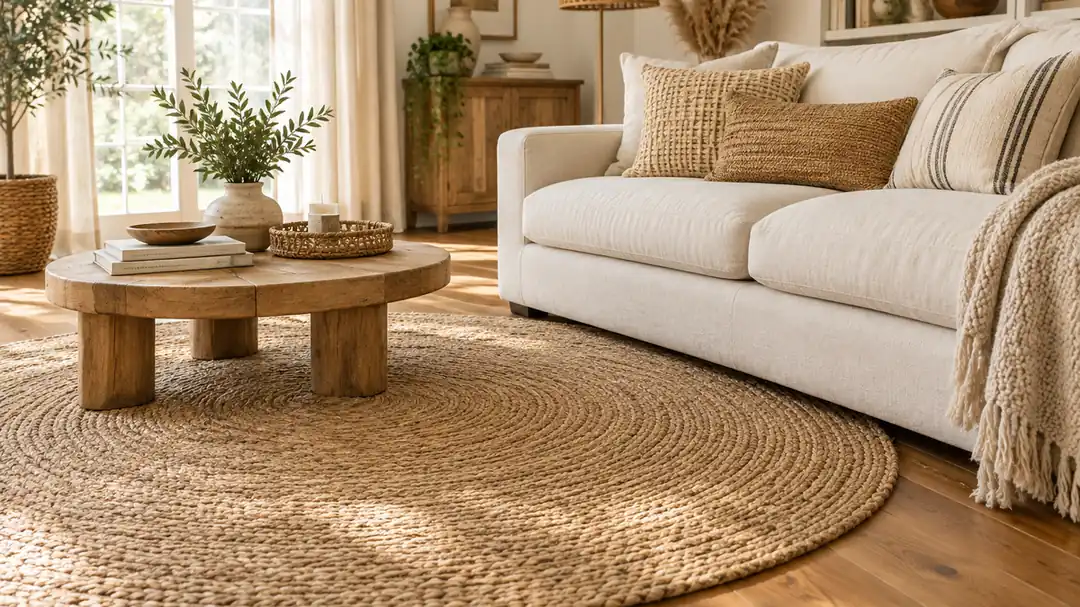
A natural fiber rug changes how a room sounds, feels and looks - but the three most common fibers could not be more different to live with. Choose wrong and you will own a rug you resent: too scratchy for the bedroom, too delicate for the entry. Here is the honest comparison, fiber by fiber, so you get it right the first time.
Jute is the fiber from the plant's stalk, spun into the thick, slightly glossy cord you see in most boho rugs. Its strengths are real: it is one of the toughest natural fibers per dollar, it takes dye beautifully (though we prefer it natural), and a tight braided weave like our braided jute area rugs shrugs off years of foot traffic. The tradeoff: jute is not soft. Bare feet describe it as "textured" at best, and it should never meet water - spills and damp bathrooms turn jute brittle and brown. Jute belongs in living rooms, dining rooms, entries and bedrooms of people who wear slippers.
Wool is the fiber your grandmother's rugs were made of, and nothing has replaced it. It is naturally stain-resistant (lanolin), naturally flame-resistant, and it bounces back from compression in a way plant fibers never do - which is why a wool rug under a dining table still looks new when a jute one would show chair-track lines. It is also the most expensive option here, and it sheds for the first few months. Wool earns its price in high-traffic rooms where you want softness: living rooms and bedrooms.
Cotton rugs - flatweaves, braided rounds, rag rugs - are the most forgiving fiber in the house. Most are machine washable or at least hoseable, they are soft from day one, and they cost a fraction of wool. The weakness is durability: cotton flattens and wears faster than the others, which is why cotton works best as a layering piece or in rooms you refresh often. A cotton rug under a jute one adds softness and pattern at the entry; in a kitchen or bathroom, cotton is the fiber we recommend without hesitation.
Entryway: jute or a jute-cotton blend - grit and moisture are constant, and jute tolerates both better than wool. Living room: jute for texture and budget, wool for softness underfoot. Bedroom: wool or cotton - this is where bare feet vote. Dining room: jute or flatweave wool; chair legs punish soft piles. Kitchen: cotton, because washable beats precious. Bathroom: cotton only, and hang it to dry.
The most common rug mistake is not fiber - it is size. A rug too small makes the whole room look underfurnished. In a living room, at minimum the front legs of every seat should rest on the rug. Under a dining table, the rug must extend 24 inches beyond the table on every side so chairs stay on it when pulled out. In a bedroom, a queen bed wants a rug extending at least 18 inches on each side. When in doubt, size up; our textiles and rugs collection lists exact dimensions on every piece.
All three fibers want the same basics: vacuum weekly without the beater bar (it chews loops), rotate twice a year so wear and sun-fade stay even, and blot spills immediately - never rub. Jute adds one rule: keep it dry, always. Wool forgives almost anything; cotton goes in the wash when the label allows. A rug pad underneath doubles the life of every fiber on this list by removing the friction that grinds fibers apart.
Between the pure fibers sit the blends, and they deserve a mention. A jute-cotton chenille rug softens jute's scratchiness while keeping most of its toughness - a good pick for bedrooms where you want the jute look without the splinter factor. Cotton-wrapped wool and rag-rug hybrids split the price gap too. The rule for blends is the same as for everything else in this shop: ask what the dominant fiber is and treat the rug as that fiber. A 70 percent jute blend is a jute rug - keep it dry, vacuum gently, enjoy the durability.
Buy jute for traffic and texture, wool for softness that outlives you, cotton for washable comfort. Match the fiber to the room's reality - not the photo you pinned - and the rug will outlast the trend that sold it. Start with our jute rugs and natural textiles, and pair the floor with a layered textile scheme to finish the room.
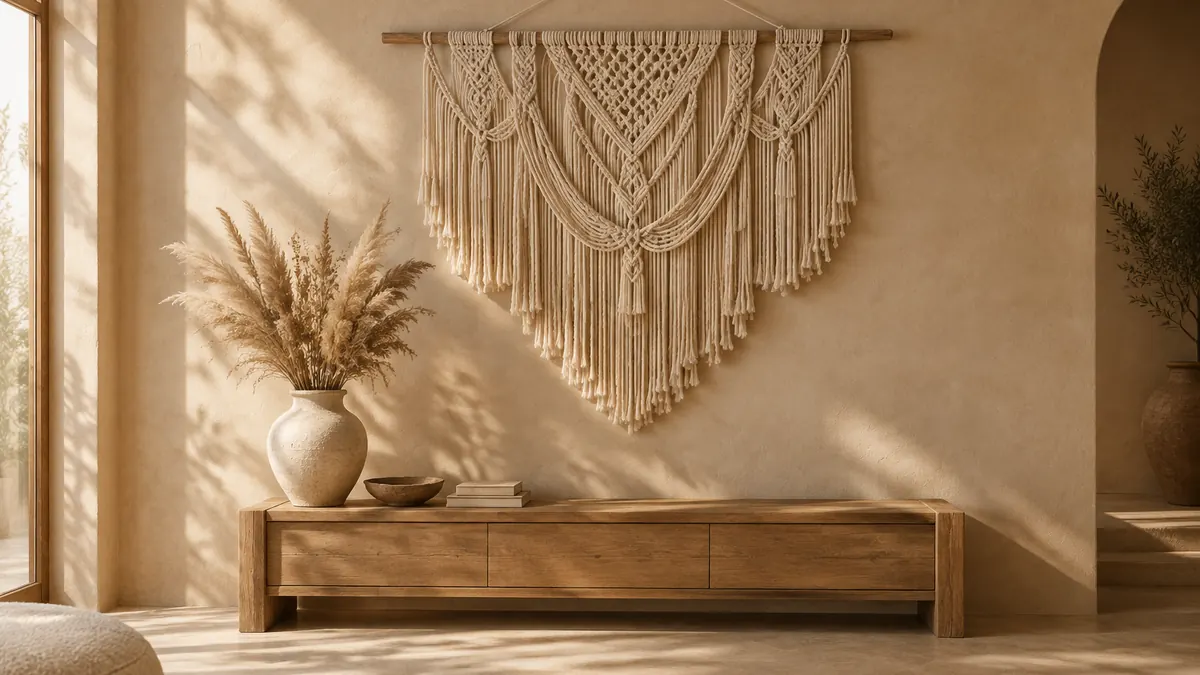
A macrame hanging is the fastest way to add warmth to a bare wall - if it hangs at the right height and scale. The room-by-room rules.
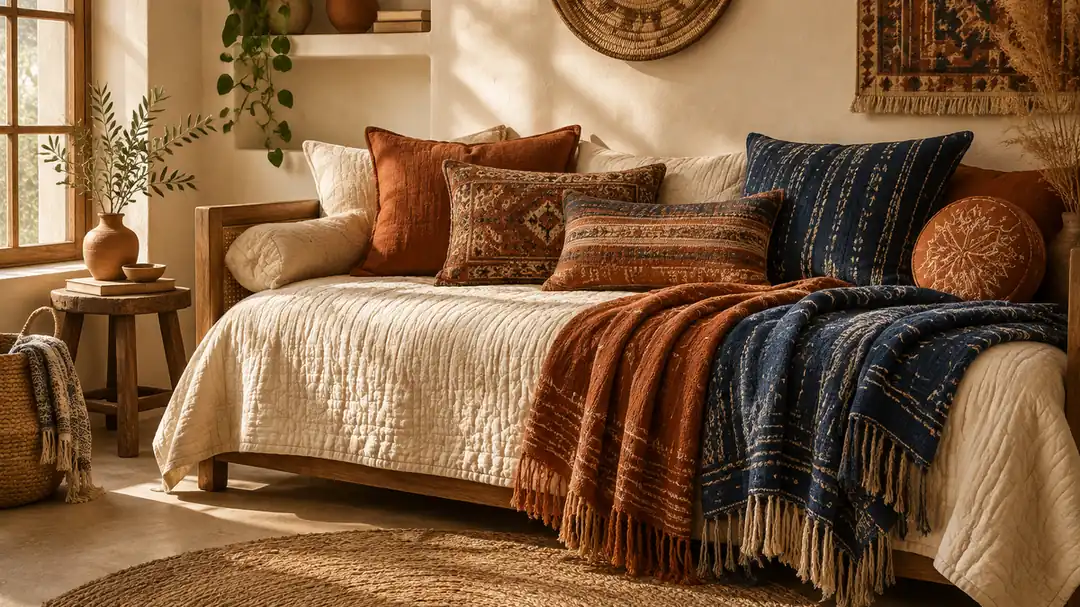
Boho warmth is not more stuff - it is three textile layers chosen in the right order. The system decorators use, simplified.
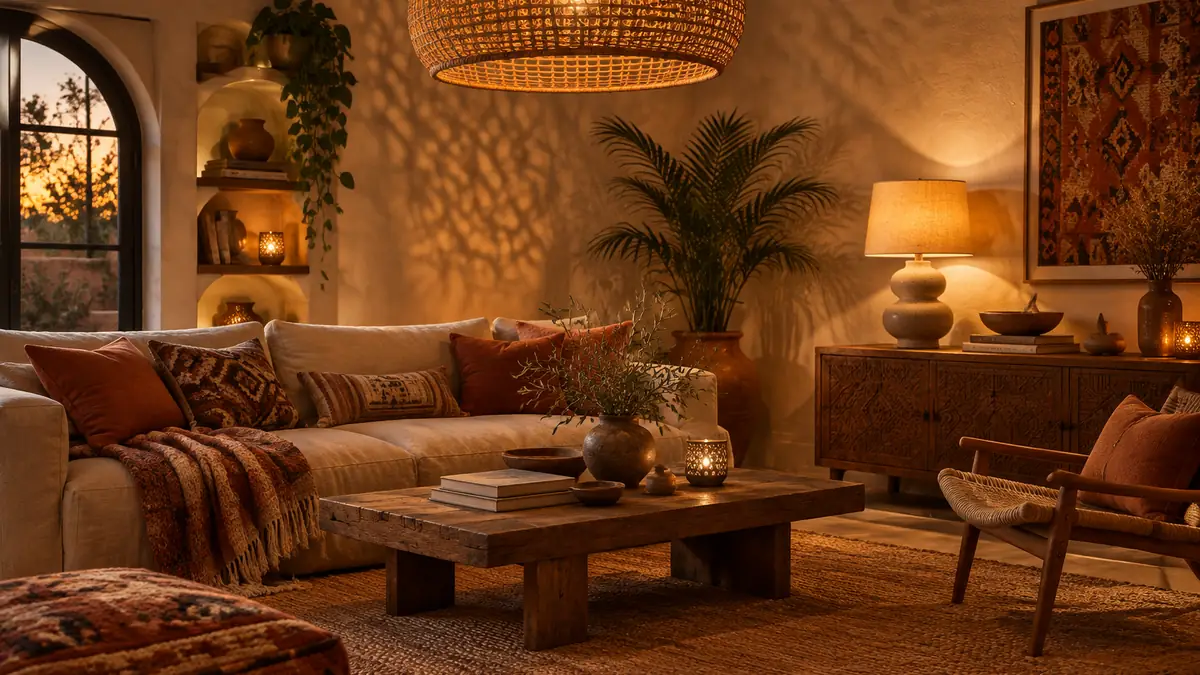
Light is the layer that makes handmade rooms glow at night. Woven pendants, beaded chandeliers and the three-source rule.