How to Layer Textiles: Rugs, Throws and Cushions That Work Together
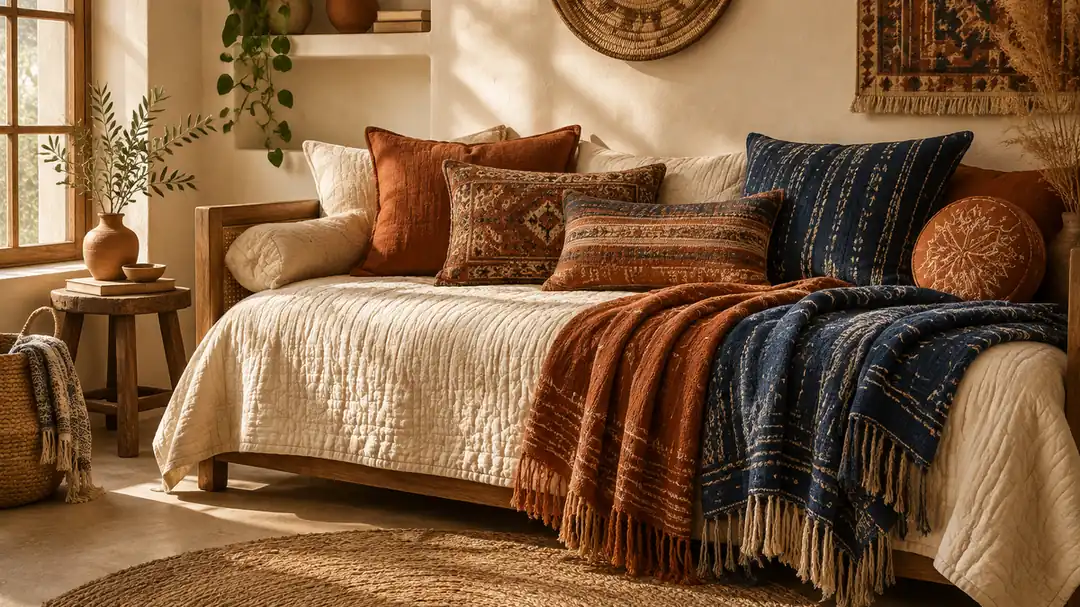
Warm, collected-looking rooms are not the result of owning more textiles - they are the result of layers that agree with each other. Get the order right and even a modest collection of pieces looks intentional. Get it wrong and the same pieces read as clutter. Here is the three-layer system we use, and how to apply it with pieces from the Gravoks textile collection.
The rug is the largest textile in the room, which makes it the one that decides everything else. Two rules keep it simple. First, texture before pattern: a braided jute or flatweave rug gives the room its tactile base without competing for attention. Second, if the rug does carry pattern, keep it geometric and low-contrast - the eye reads busy floors as mess. A natural jute rug is the safest foundation boho rooms can have: neutral, textured, and it makes every color layered on top look richer.
Onto that base goes the piece people touch: the quilted bedspread on the bed, the chunky throw on the sofa arm, the cushion covers that make a couch livable. This layer is where color enters the room - but budget it. One large textile plus two or three cushions is a finished look; seven cushions is a showroom. A quilted cotton bedspread in a warm neutral (cream, rust, indigo) carries a whole bedroom, and a handwoven wool throw folded over a sofa corner adds both texture and a literal invitation to sit.
The final layer is small and personal: a patterned cushion cover pulled from a market memory, a table runner that brings the dining set to life, a woven wall hanging that repeats the rug's texture at eye level. Accents should repeat something already in the room - a color from the bedspread, the jute texture from the floor - because repetition is what makes a room read as "styled" rather than "accumulated". Three to five accents is plenty for most rooms.
If mixing colors paralyzes you, use the 60-30-10 rule: 60 percent of the room's soft surfaces in a neutral base (cream, sand, natural jute), 30 percent in a secondary tone (rust, terracotta, indigo), 10 percent in an accent (mustard, sage, black). The beauty of natural fibers is that they all lean warm, so the 60 percent assembles itself. Our cushion covers and throws are dyed in exactly these families so the formula works off-the-shelf.
Color gets the credit, but texture is what makes layered rooms feel expensive. The rule: every layer should feel different from the one below it. Smooth cotton quilt over nubby jute. Chunky wool throw over smooth linen sofa. Soft fringe macrame above flat painted wall. When two textiles have the same texture, separate them in space or swap one - two nubby surfaces touching read as a mistake, while the same two across the room read as a theme.
The bedroom: jute rug under the bed's lower third, quilted cotton bedspread in cream, two rust cushions and one indigo, wool throw folded at the foot. The living room: braided jute rug, smooth sofa, three cushions (two neutral, one patterned), chunky throw on the arm, macrame hanging echoing the rug texture on the wall. The dining room: jute or flatweave rug that slides with the chairs, table runner in the secondary color, woven pendant light above repeating the weave. Each room uses the same system at different scales.
Too many patterns is the classic error - cap patterned textiles at two per room and keep the rest solid or textured. Matching sets (same fabric on every cushion) flatten a room; near-matches with varied texture beat perfect matches. And the most common mistake of all: buying for the photo instead of the life. If nobody is allowed to touch the throw, the room fails at its one job. Every piece we stock is made to be used - washable cottons, forgiving jute, wool that only improves with wear.
Rooms come together over months, not shopping sprees. Start with the rug, live with it for two weeks, then add the large textile, then the accents. Browse the full textiles and rugs collection to start layer one, and pair the finished floor with warm layered lighting - the two together are what make a room feel finished at night.
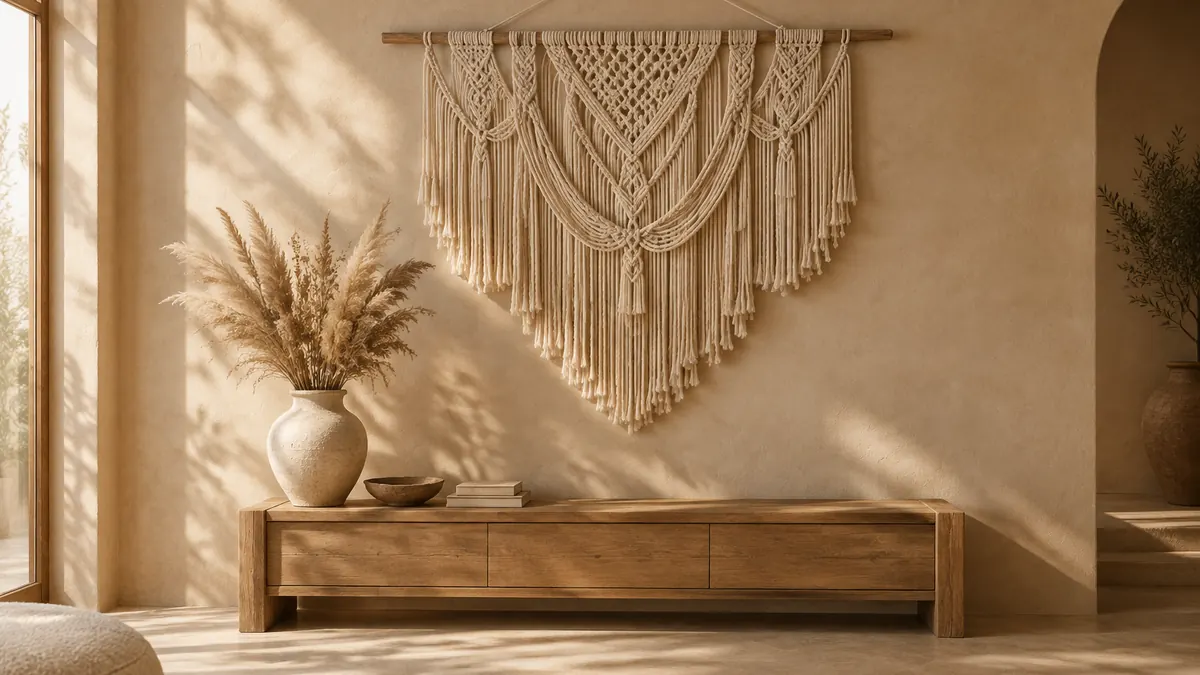
A macrame hanging is the fastest way to add warmth to a bare wall - if it hangs at the right height and scale. The room-by-room rules.
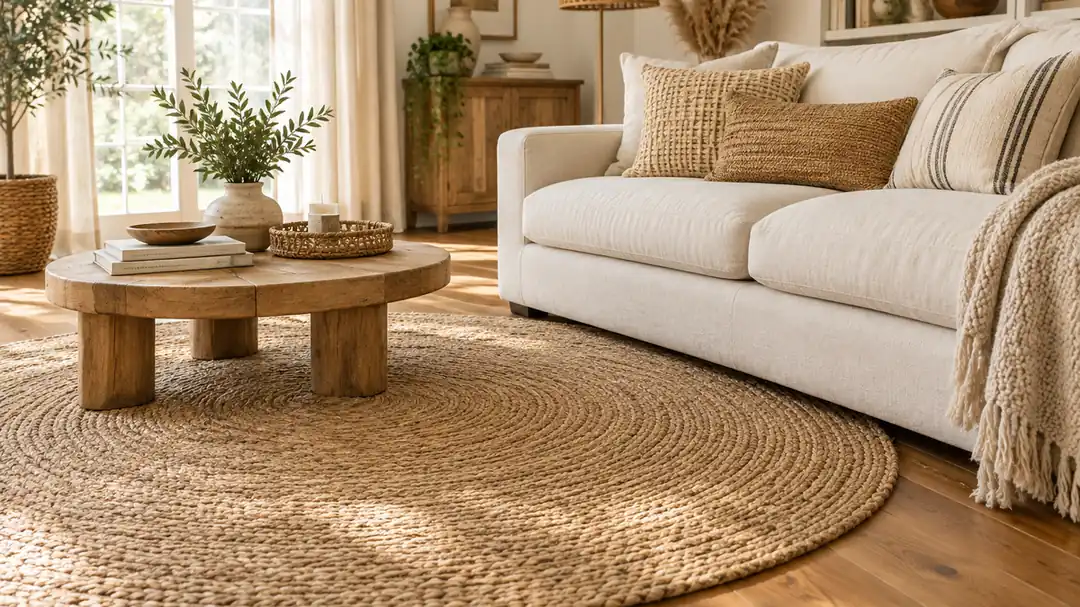
Jute, wool and cotton each earn their place in a different room. Durability, feel, cleaning and cost - compared honestly.
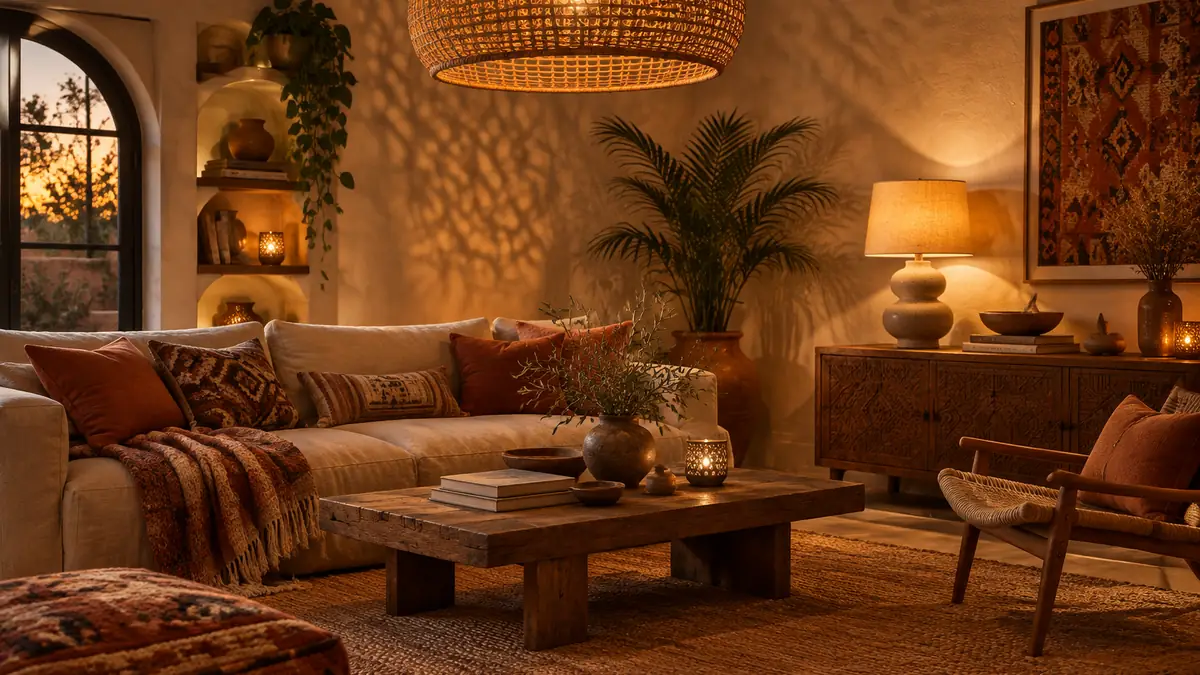
Light is the layer that makes handmade rooms glow at night. Woven pendants, beaded chandeliers and the three-source rule.