How to Style a Macrame Wall Hanging in Every Room
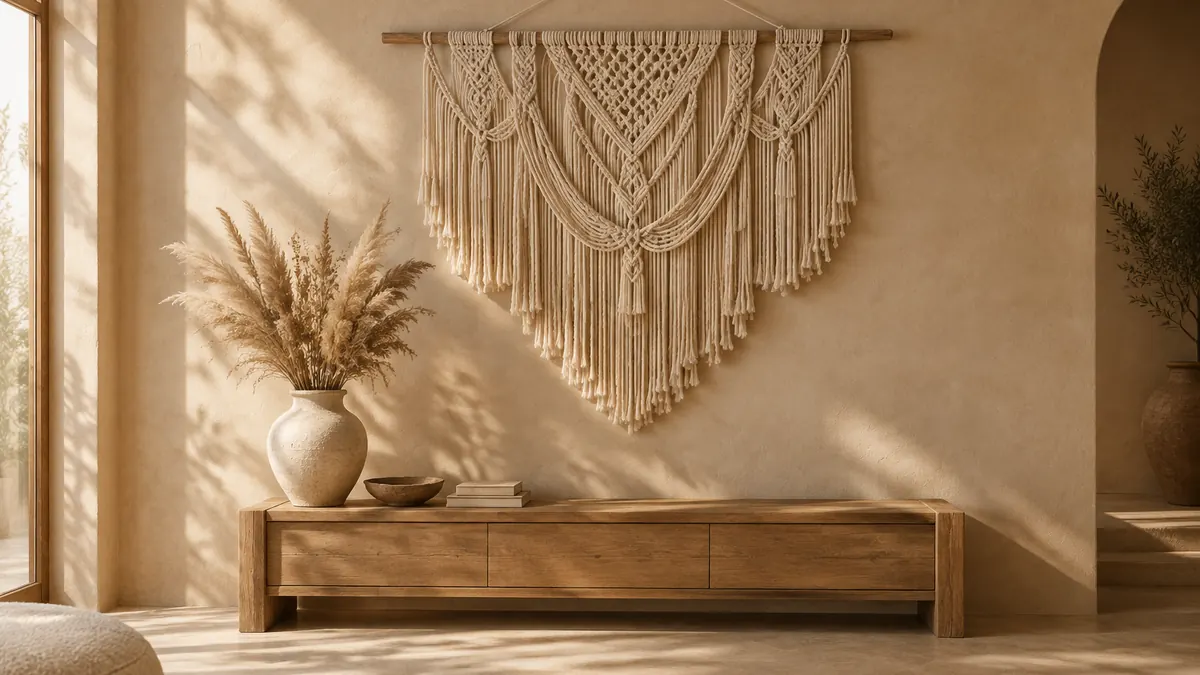
A macrame wall hanging solves a problem most rooms have: a big blank wall that paint alone cannot fix. Cotton cord adds texture, softens echoes, and catches afternoon light in a way framed prints never do. But hang one at the wrong height or in the wrong scale and it reads as an afterthought. Here is how to get it right, room by room, with pieces from our wall decor collection.
The most common macrame mistake is hanging it too high. Art galleries hang art with its center at 57 to 60 inches from the floor - eye level for the average person - and macrame is no different. Measure 57 inches up, mark the wall, then position the hanging so its visual center (not the dowel) sits on that mark. Above furniture, the rule shifts: leave 6 to 10 inches between the top of a sofa or console and the bottom of the fringe, so the piece breathes without floating away.
A 24x36 inch hanging disappears on a wall built for a queen bed; a 48 inch piece overwhelms a hallway. Work in fractions: the hanging should span roughly two-thirds to three-quarters of the width of the furniture below it. Over a 60 inch sofa, that means a 40 to 45 inch piece. On an open wall with no furniture, size up and let the macrame act as the anchor - our cotton macrame wall hanging comes in three sizes precisely so you can match this ratio.
In the living room, macrame works hardest above the sofa. Pair a large natural-cotton piece with two smaller companions - one offset to each side - for a gallery feel without frames. Keep 3 to 4 inches between pieces. If the room already has woven elements (a jute rug, rattan chairs), choose a hanging with simple knotwork so the textures do not compete; save the dense, patterned pieces for quieter rooms.
A macrame hanging above the bed does what an upholstered headboard does - absorbs sound and softens the wall - at a fraction of the weight. Because you see it first thing in the morning and last thing at night, this is the room for the piece you love most. Hang it so the fringe ends sit above the headboard line, and choose cotton cord over any blend: cotton hangs straight and does not stiffen with bedroom humidity.
Entries and hallways are transitional spaces - guests move through them fast, so the piece needs to read from a distance. High contrast helps: a natural cotton hanging on a deep paint color (clay, forest, charcoal) shows the knotwork clearly. In a narrow hallway, one medium piece on the long wall beats a row of small ones; a row reads as clutter at walking speed.
Cotton macrame survives in a bathroom only with real ventilation - a window or a fan that actually runs. The cord absorbs moisture, and in a damp room that means mildew. Powder rooms that stay dry are fine. In kitchens, hang macrame away from the stove: grease settles on fibers and is nearly impossible to wash out of knotted work. A dining nook wall, away from cooking spatter, is the safer choice.
Macrame plays well with other wall elements if you vary the type, not the theme. Pair a hanging with a round mirror (the circle softens all the straight cord lines) or a floating shelf holding trailing plants - pothos and ivy echo the fringe. Keep a 4 inch minimum gap between pieces so each keeps its outline. Our recycled glass mosaic mirror next to natural macrame is a favorite pairing: rough glass texture against soft fiber.
Dust macrame monthly with the soft brush attachment of your vacuum, held an inch away, or take the piece outside and give it a gentle shake. Spot clean cotton with a damp cloth and mild soap - never soak it, which loosens the knots. Keep it out of direct sun; UV fades natural fibers over a season or two. Follow those three habits and a quality hanging looks identical a decade later.
Start by measuring the wall and the furniture below it, then browse the full wall decor collection - macrame hangings, woven tapestries, carved panels and mirrors, all handmade and shipped free across the US. If you are styling a whole room, our textile layering guide shows how the wall piece connects to rugs, throws and cushions.
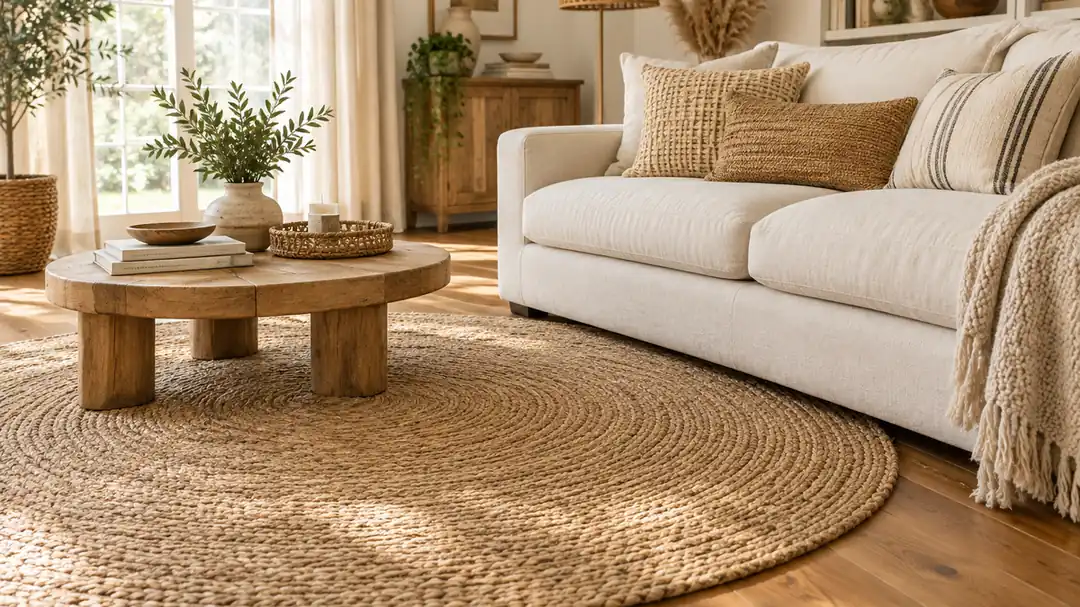
Jute, wool and cotton each earn their place in a different room. Durability, feel, cleaning and cost - compared honestly.

Boho warmth is not more stuff - it is three textile layers chosen in the right order. The system decorators use, simplified.

Light is the layer that makes handmade rooms glow at night. Woven pendants, beaded chandeliers and the three-source rule.