What Is Boho Style? A Material-First Guide to Decorating Naturally
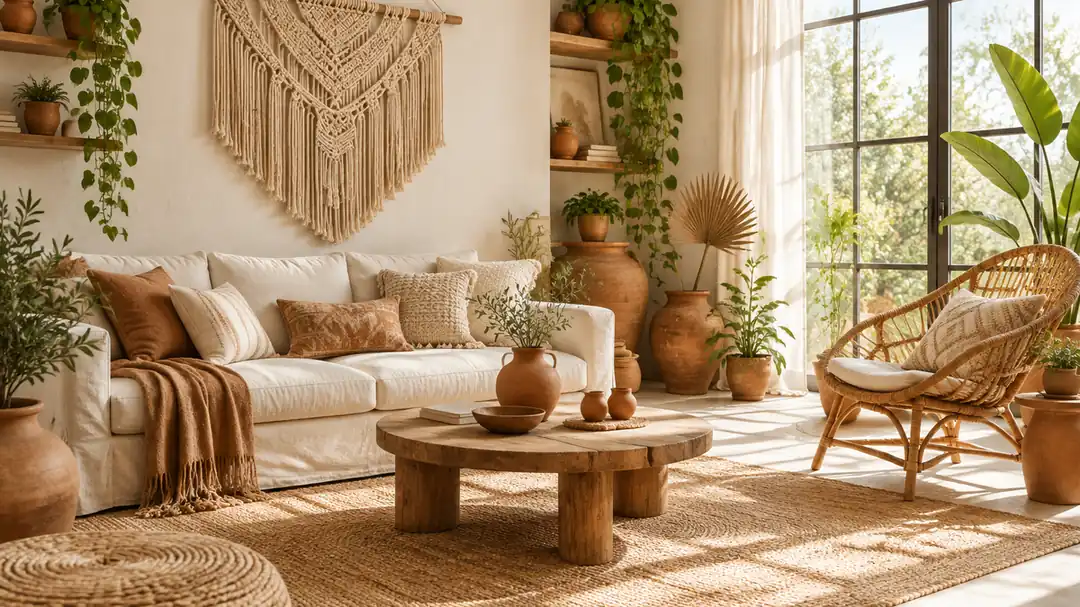
Search "boho style" and you get a thousand photos of the same living room. But the rooms that actually feel boho - warm, collected, calm - share something deeper than pillows: an honest material palette. Boho is, at its core, a promise that the things in your room are made of real cotton, real jute, real clay and real wood, by people rather than molds. Here is the material-first version of the style, and how to build it with pieces from the Gravoks collection.
Cotton is the soft layer: macrame hangings, quilted bedspreads, cushion covers, table runners. It takes dye warmly, washes easily, and hangs with a drape synthetics cannot copy. Jute is the durable layer: rugs, baskets, tapestry weave. It is the texture you feel under bare feet and the reason boho floors look grounded. Rattan and bamboo are the light layer: woven pendant lamps, bead chandeliers, trays. They glow when lit and weigh almost nothing. Ceramic is the touch layer: vases, mugs, plates, butter dishes - the pieces that make a house feel used and loved. Glass, especially recycled glass, is the sparkle layer: tumblers, mosaic mirrors, lamps that catch evening light.
The reason fake-boho rooms feel off is that they are printed: plastic "rattan", vinyl "linen", polyester "macrame". Real fibers age - they soften, patina, take on the room's life - while prints just peel. Material honesty is also why boho pairs so naturally with handmade work: a hand-knotted hanging and a hand-thrown vase share the same fingerprint of a maker. Everything in the Gravoks shop is chosen by that standard: if we cannot name the material exactly, we do not stock it.
Boho rooms start with a warm neutral base - cream, sand, natural fiber tones - because natural materials all lean warm and they harmonize automatically. Onto that base, layers: a jute rug for the floor, a quilted cotton bedspread or wool throw for softness, cushions in rust and indigo for depth. The famous "boho color" is not a color at all - it is what warm light does to natural fiber at dusk. Get the base right and the colors can be almost anything.
Three non-textile elements finish the style. Plants - trailing pothos, a monstera, dried grasses in a ceramic vase - echo the fiber textures and keep the air (literally) alive. Warm light, as our lighting guide covers, is what makes the textures visible at all; cool light kills the style instantly. And negative space: boho rooms are layered but not crammed. Every grouping needs breathing room, because the eye needs somewhere to rest between textures.
Living room: jute rug, cotton cushions and a wool throw, woven pendant or ceramic floor lamp, one macrame hanging, plants on a wooden side table. Bedroom: quilted cotton bedspread, jute rug underfoot, beaded chandelier or soft table lamps, a woven tapestry instead of a headboard. Dining room: stoneware plates and glass tumblers on a wooden table, table runner in the secondary color, rattan pendant above. Each room uses the same five materials at different ratios - no shopping spree required.
Not clutter: five well-chosen textures beat forty accessories. Not expensive: jute and cotton are among the cheapest natural fibers precisely because they are abundant - the cost in honest handmade work is labor, not material. And not a costume: if a piece does not survive your real life (kids, pets, Tuesday dinners), it is decor theater. Buy washable cottons, forgiving jute, stoneware that chips honestly instead of shattering.
A material-first room also fixes the budget question. Handmade does not mean expensive across the board: a hand-painted mug or a cotton cushion cover costs the same as its factory-printed twin, while a handwoven chandelier is genuinely an investment piece. The trick is spending where the material earns it - splurge on the pieces you touch every day (the rug, the bedspread, the everyday plates) and save on accents. One honest piece added a month builds a room faster - and better - than a weekend haul ever does.
Rooms built this way come together over seasons. Start with one piece made of a material you can name - a macrame wall hanging, a hand-painted mug, a jute rug - and let it set the standard for what follows. Everything else in the room will either rise to it or reveal itself as the filler it always was. That is the whole style: real things, made by hands, arranged with room to breathe.
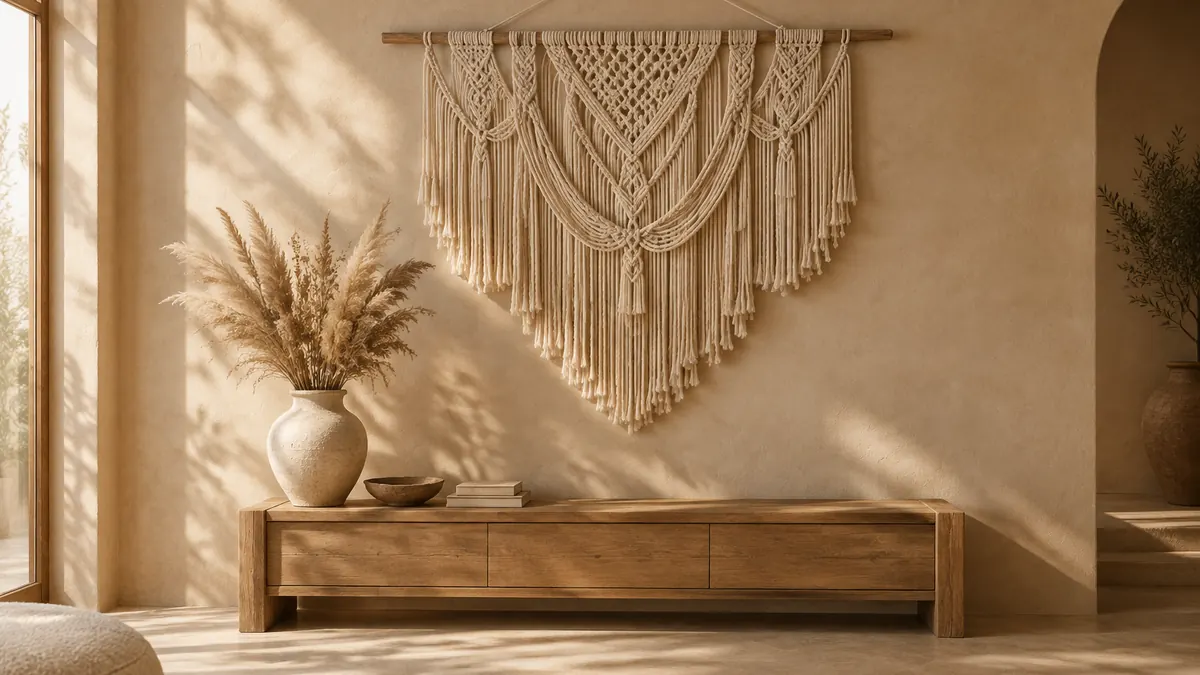
A macrame hanging is the fastest way to add warmth to a bare wall - if it hangs at the right height and scale. The room-by-room rules.
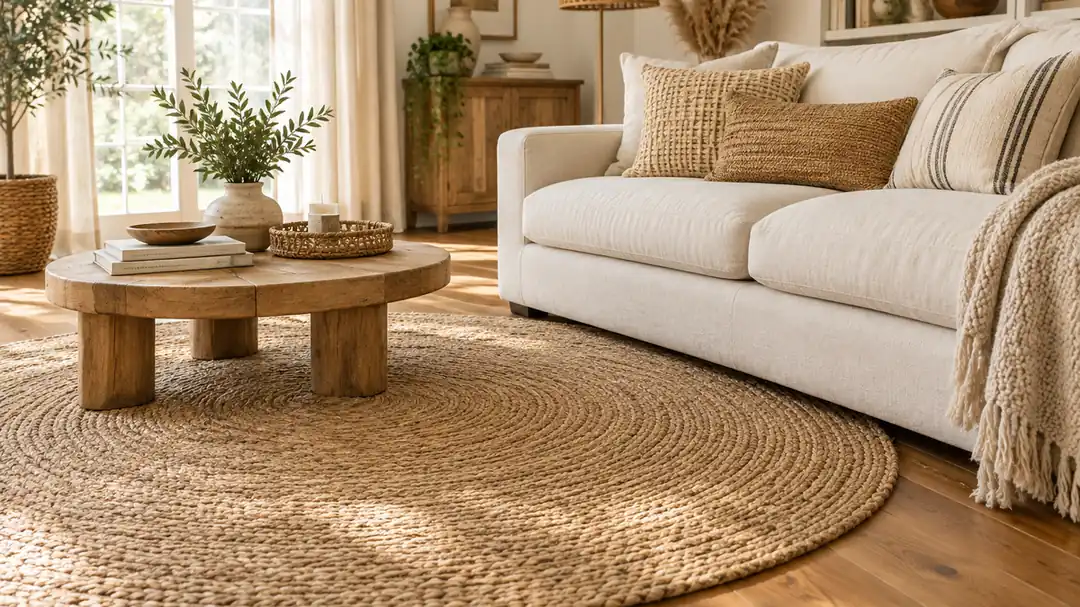
Jute, wool and cotton each earn their place in a different room. Durability, feel, cleaning and cost - compared honestly.
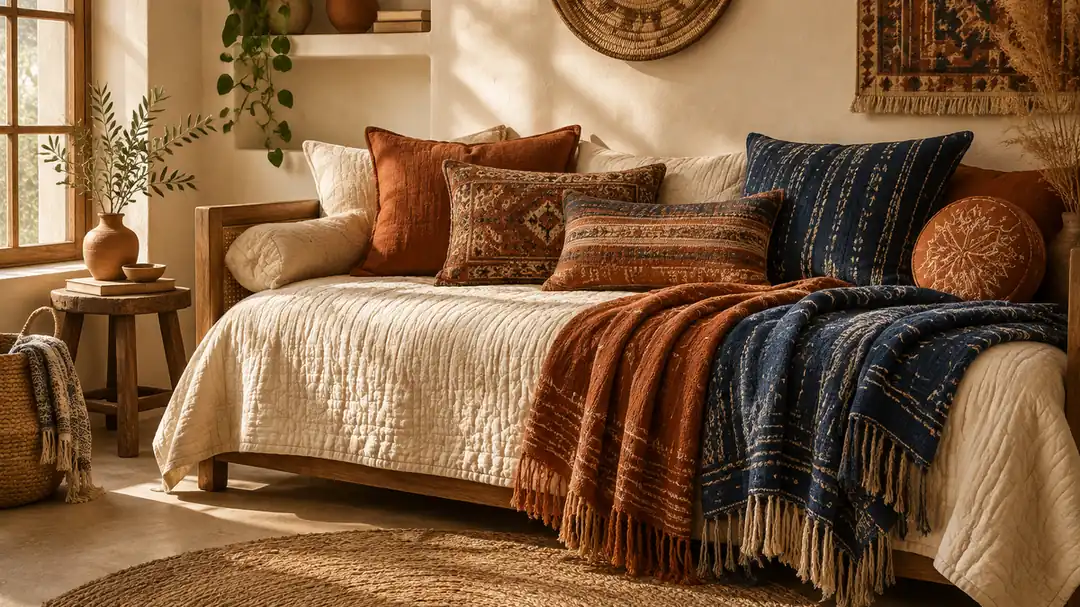
Boho warmth is not more stuff - it is three textile layers chosen in the right order. The system decorators use, simplified.